

News
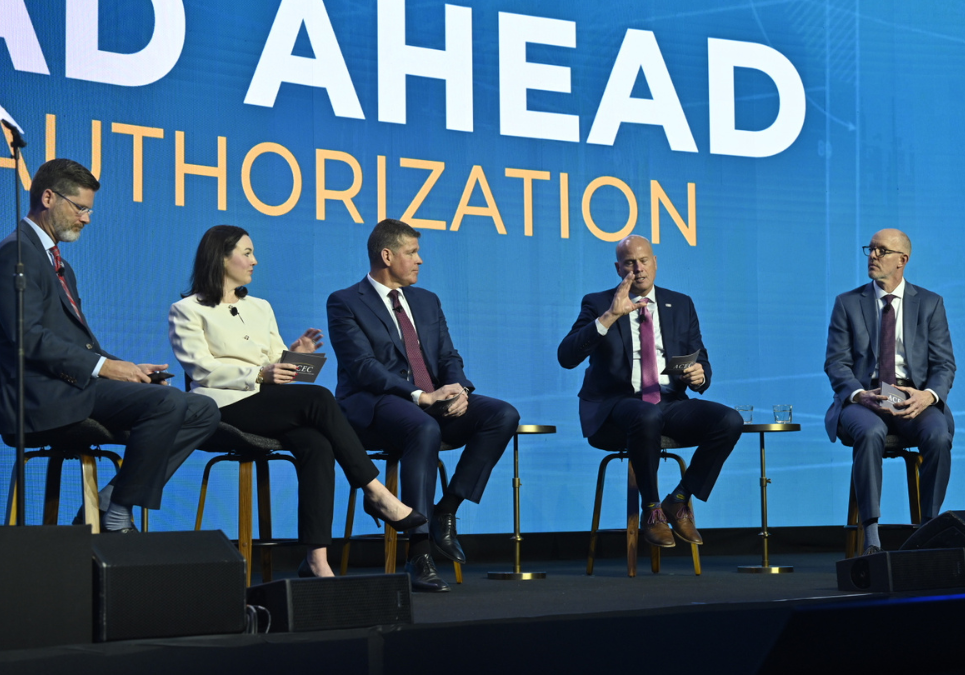
For our industry, the surface transportation bill is the most important and consequential piece of legislation currently under debate in Congress. It’s a test of whether congressional leaders can still cut the kind of old-fashioned political deal that moves money and votes to get important things accomplished. On the eve of ACEC’s citizen lobbyists heading to Capitol Hill to discuss the importance of passing a robust surface transportation package, Annual Convention attendees had the opportunity to get a bit of insight and intelligence into the inner workings of the debate from four Washington insiders.
Federal Highway Administrator Sean McMaster kicked off the afternoon briefing—and he began his remarks with a declaration: “We are getting America building again.” He touted the Trump administration’s efforts to streamline project delivery and reform environmental review to facilitate building “big, beautiful things that last.” McMaster also stressed the White House’s commitment to partnering with the private sector to build a robust transportation system that is “the envy of the world.” On the surface transportation bill, he acknowledged the need for long-term, predictable funding and assured attendees that the White House knows how important this is. “You can’t grow at the speed of Trump without transportation.” McMaster noted that the nation’s 250th birthday coincides with the 70th anniversary of the American highway system. “It’s a great opportunity to reflect on how far we’ve come,” he said. “I can’t wait to see what the next 250 years will hold.”
The latter half of the afternoon session featured a panel discussion with Politico Senior Political Analyst Jonathan Martin and two former chairs of the House Transportation and Infrastructure Committee, Oregon Democrat Peter DeFazio and Pennsylvania Republican Bill Shuster. Before welcoming the former members, Martin spent a few moments discussing the political lay of the land. Echoing earlier remarks by author Jon Meacham, Martin concurred that we are living in the Decade of Trump. “He controls both parties,” he said. “He is the dominant force in the Republican Party, and the Democrats are organized around opposing him.” President Trump has changed the political game, but Martin argued that the real cultural sea change began with the 2006 invention of the iPhone and the concurrent explosion of social media. Now, we can fight our political battles in real time, with real-world implications. Martin joked that even holidays aren’t immune. “It used to be Thanksgiving meant eating some turkey with family and watching the Lions lose to someone,” he said. “Now you have to be afraid that your MAGA uncle and woke niece are going to be throwing rolls at each other.”
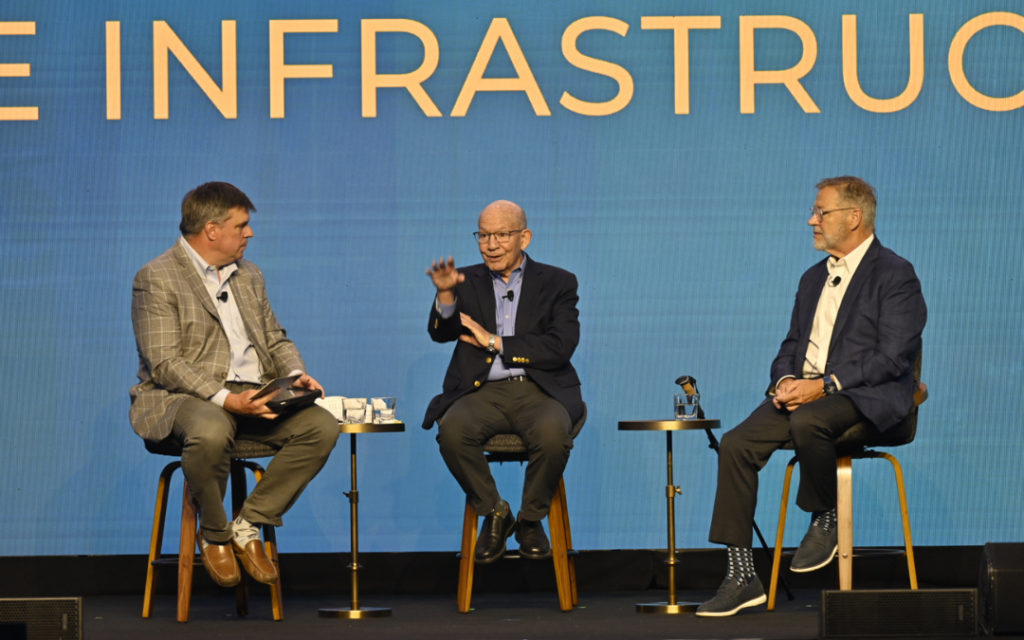
Martin then welcomed to the stage DeFazio and Shuster, introducing them as two of the most consequential leaders of the Transportation Committee with a shared record of getting infrastructure done. Both members agreed that transportation is a win for everyone in an election year—the closest thing we may ever get to a benign, universally agreed-upon issue in a deeply divided Congress. “Transportation is not partisan,” said Shuster. DeFazio agreed but noted the Senate could (and likely would) prove a hurdle. “We’re House members. We’re lawmakers. The Senate is something else,” he joked.
In advance of ACEC’s Hill visits, both members were quick to offer tips on how to best reach members. “Talk about how the bill affects your firm and how it affects jobs,” said DeFazio. “Members want to hear how it affects their districts.” Shuster concurred. “Putting a name and a face with an issue is key. Get in the ear of staff and talk about what’s at stake.”
The members also weighed in on the current state of politics. The conventional wisdom of the day was that the contentiousness was ushered in by a clash between Donald Trump and a political establishment chafing against his influence. But Shuster argued that this climate of continuous conflict actually began in 1994 with Newt Gingrich’s Contract with America. “Democrats had been in power 40 years,” he said. “Republicans won control—and that’s where the permanent war began.”




Date
May 5, 2026
Category
Topic