

Resource
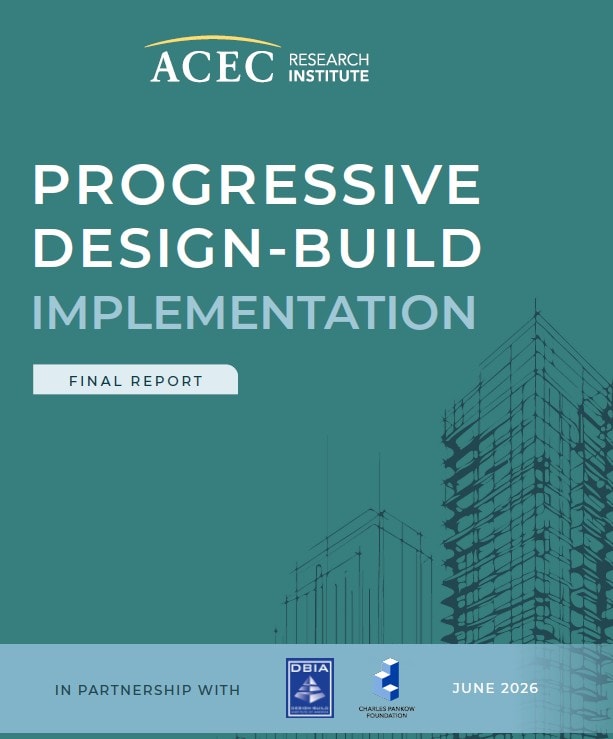
Progressive Design-Build (PDB) continues to gain momentum as owners seek more collaborative, flexible, and efficient approaches to delivering complex infrastructure projects. Building on the ACEC Research Institute’s earlier research examining the state of Progressive Design-Build practice, this 2026 implementation report translates industry experience into practical recommendations for owners, engineers, and contractors seeking to improve project outcomes. Developed through collaboration between the ACEC Research Institute, the University of Colorado Boulder, the Charles Pankow Foundation, and the Design-Build Institute of America (DBIA), the report provides actionable guidance across every stage of the PDB process—from procurement and team formation through commercial alignment, design development, pricing, and project execution.
Why This Research Matters
- As Progressive Design-Build adoption expands, many owners and project teams are implementing the delivery method for the first time and need practical guidance beyond high-level principles.
- While PDB emphasizes collaboration and flexibility, successful implementation requires disciplined governance, clearly defined roles, transparent commercial processes, and intentional alignment throughout Phase 1 Design and Preconstruction.
- Capturing and sharing proven implementation practices helps owners reduce risk, strengthen collaboration, and improve project performance across a growing portfolio of PDB projects.
Key Findings
- Successful Progressive Design-Build projects consistently establish clear governance structures, defined decision-making authority, and shared project objectives from project initiation.
- Phase 1 Design and Preconstruction serves as the foundation for project success by aligning scope, budget, risk allocation, commercial terms, and stakeholder expectations before progressing to final pricing.
- Open communication, transparency, and trust among owners, designers, and contractors improve collaboration and reduce the likelihood of disputes throughout project delivery.
- Effective risk management begins early through collaborative identification, evaluation, and allocation of project risks rather than relying on traditional contractual approaches.
- Organizations that invest in structured collaboration, leadership alignment, and disciplined implementation practices are better positioned to achieve predictable project outcomes.
Implications for Practice
The report demonstrates that the benefits of Progressive Design-Build are realized through disciplined implementation rather than delivery method selection alone. Owners and project teams can improve schedule performance, cost certainty, collaboration, and overall project outcomes by establishing strong governance, investing in early alignment, maintaining transparent commercial processes, and fostering a culture of shared decision-making throughout the project lifecycle.
Methodology
The recommendations are based on extensive collaboration among experienced public owners, engineering firms, contractors, and industry experts who have successfully delivered Progressive Design-Build projects across the United States. The report synthesizes lessons learned, industry experience, and leading practices into a comprehensive implementation framework covering procurement, governance, collaboration, commercial alignment, risk management, pricing, and project execution.
Practical Applications
Public owners can use this report to develop or strengthen Progressive Design-Build programs, establish consistent procurement and governance practices, and improve project delivery outcomes. Engineering firms, contractors, and integrated project teams can apply the recommendations to improve collaboration, strengthen risk management, enhance commercial alignment, and deliver more successful projects. Industry organizations, policymakers, and educators can also leverage the findings to advance training, guidance, and procurement frameworks that support broader and more effective implementation of Progressive Design-Build.